· Updated · AI Workforce · 5 min read
I Went Offline for 72 Hours. My AI Employee Did Not Notice.
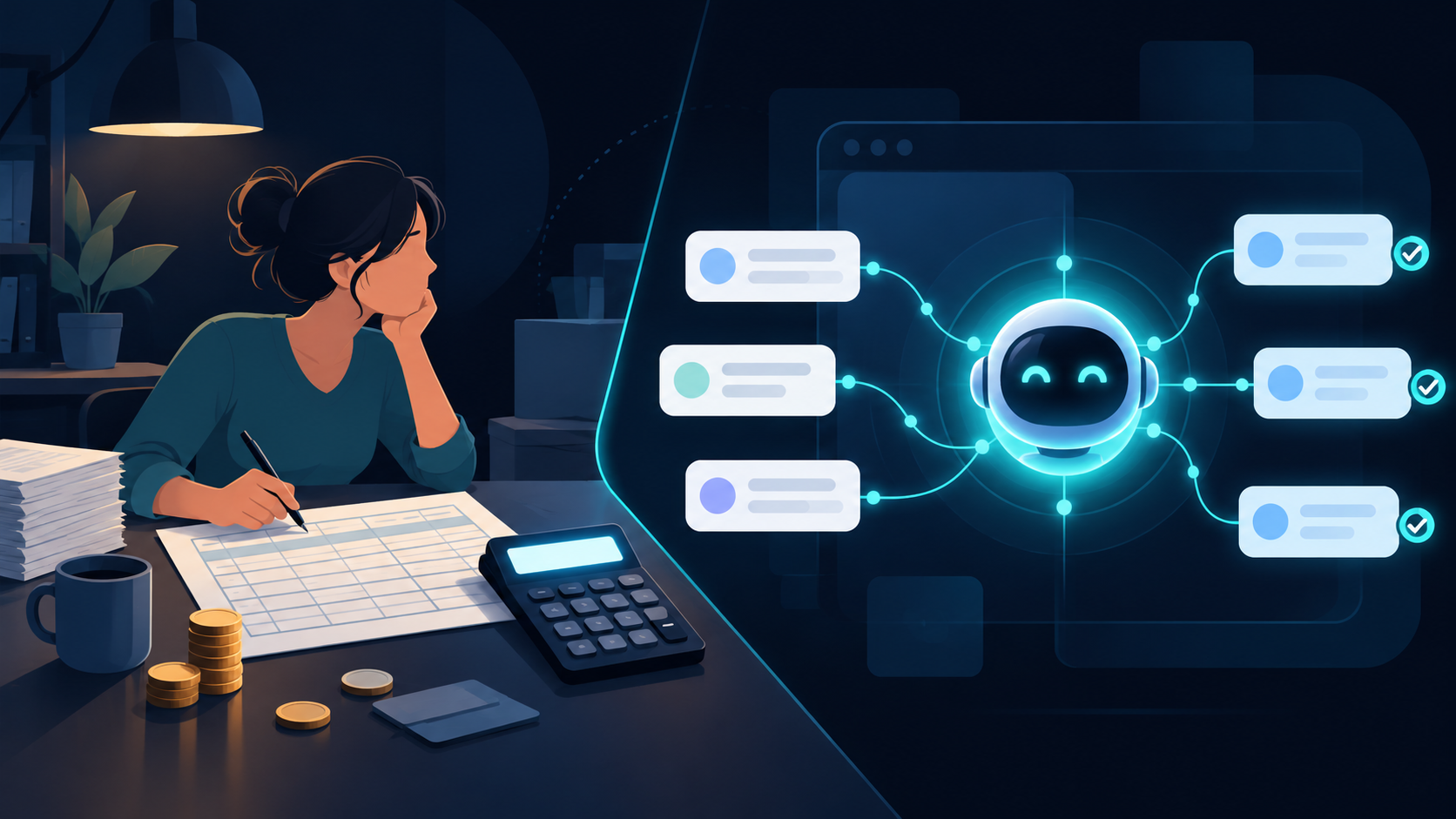
A small e-commerce founder went offline for 72 hours and an AI employee handled all 143 customer messages. Here is how $280 per month replaced 18 hours of support.

Last Friday at 6:14 PM, I boarded a flight to Cabo. No Wi-Fi. No laptop. Just me, my wife, and a 72-hour commitment to not checking Slack.
When I landed and turned my phone back on Sunday night, I had 143 messages in our customer support channel. The AI had handled all of them.
Not “forwarded for later review.” Not “flagged for human follow-up.” Handled. Resolved. Closed.
The Weekend That Broke Me
Three months earlier, I had had the opposite experience. It was a Saturday morning, and I was at my kid’s soccer game. My phone started buzzing at 8:47 AM — a customer in our Shopify store had received the wrong item. Then another one messaged about a shipping delay. Then three more asked about return policies.
By halftime, I had typed 47 responses on my phone. I missed my daughter’s goal. She still reminds me.
That night, I did the math. We are a small e-commerce brand doing about $380K/year. We get 200–250 customer messages per week. Roughly 40% come in outside business hours — evenings, weekends, holidays. Each one takes 3–8 minutes to respond to manually.
I was spending 12–15 hours per week on customer support. My co-founder was spending another 8. That is 20+ hours of founder time on questions like “Where is my order?” and “Do you ship to Canada?”
What We Actually Built
We did not start with AI. We started by listing every customer question we had received in the past 6 months. There were exactly 847 conversations. Here is what they broke down into:
- Order status and tracking: 34%
- Return and exchange requests: 22%
- Product questions (sizing, materials, compatibility): 19%
- Shipping questions: 12%
- Complaints and escalations: 8%
- Everything else: 5%
The pattern was obvious. 87% of our support volume was repetitive. The answers were already in our FAQ, our shipping policy page, and our order confirmation emails. Customers just did not read them.
We set up an AI agent connected to our Shopify store, our shipping provider API, and our knowledge base. It can look up any order by email or order number, process return labels, answer product questions from our catalog, and escalate to a human when it hits something it cannot handle.
The Numbers After 90 Days
Here is what changed:
- Response time: From 4.2 hours average (business hours only) to 47 seconds (24/7). Customers do not care that it is 2 AM. They want an answer now.
- Resolution rate: The AI fully resolves 74% of conversations without any human involvement. The remaining 26% get routed to us with full context — the customer order history, what they have already tried, and a suggested response.
- Time saved: 18 hours/week between me and my co-founder. That is roughly 936 hours per year. At our blended hourly value of $150, that is $140,400 in recovered founder time.
- Cost: $280/month for the AI platform. We also spent about 12 hours upfront training it on our product catalog and policies.
- Customer satisfaction: Our CSAT score went from 4.1 to 4.6. Turns out, customers prefer instant accurate answers over delayed human ones — at least for routine questions.
The Honest Limitations
It is not perfect. Here is what it cannot do well:
- Emotional situations. When a customer is furious because their order arrived damaged, they want empathy, not a return label. The AI can process the return, but it cannot read the emotional temperature. We have trained it to escalate angry messages immediately.
- Complex product questions. Our products have nuanced compatibility requirements. “Will this work with my 2019 MacBook Pro?” sometimes needs a human who understands the edge cases. The AI gets these right about 80% of the time. That is not good enough for us, so it escalates uncertain answers.
- Refund disputes. When a customer claims they returned something but we do not have record of it, that is a judgment call. The AI flags these. We handle them personally.
The 8% escalation rate feels right. We are not trying to eliminate human support. We are trying to eliminate the repetitive stuff so we can actually focus on the hard problems.
What I Would Do Differently
If I were starting over, I would spend more time on the training data upfront. We launched in a week, and the first few days were rough — the AI gave a wrong return window to three customers. We fixed it, but those three customers had a bad experience.
I would also build the escalation rules more carefully from day one. Our first version escalated too aggressively — it was sending us 15+ messages a day that it could have handled itself. After tuning, it is about 4–5 per day.
The biggest lesson? The value is not the time saved. It is the mental load. I do not dread checking my phone anymore. I do not wake up at 3 AM wondering if a customer is waiting. The system is either handling it or it will ping me if something needs attention.
I went to Cabo and came back to a business that ran better without me. That is the whole point.
Ready to build your AI employee?
Echo365 handles customer support, order management, and operations — so you can take that vacation.